
Chen Lab of Extracellular Vesicles in Environmental Research
Decoding the role of extracellular vesicles in toxicity caused by environmental chemicals and mixtures
Our Mission
The Chen Lab studies how environmental toxicants—particularly in mixture settings—disrupt neural cell functions and contribute to neurotoxicity. We integrate extracellular vesicle biology, mixture toxicology, gene editing, and advanced metal analytics to uncover mechanisms of toxicity relevant to real-world human exposures.
About the Lab
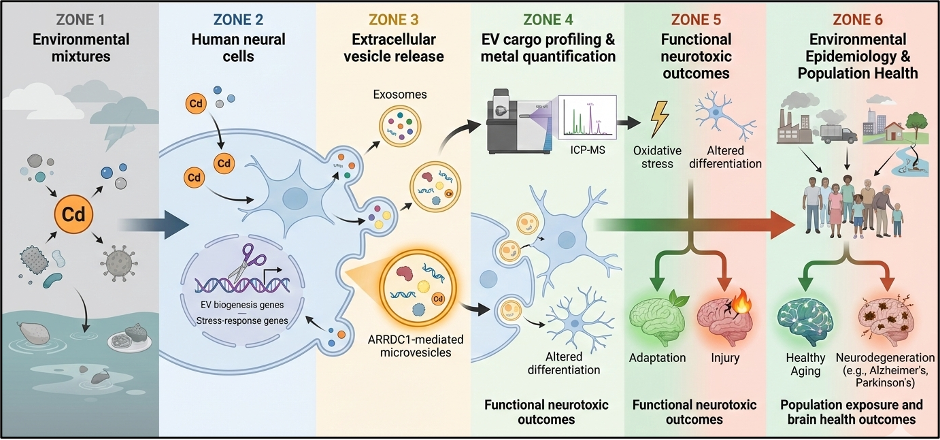
Environmental exposures rarely act in isolation. Yet most toxicology studies still focus on single chemicals and bulk cellular outcomes. Our lab addresses this gap by focusing on intercellular communication as a key target of environmental toxicants and the important role of extracellular vesicles. We integrate environmental science, toxicology, extracellular vesicle biology, and CRISPR/Cas9-based gene editing to comprehend the mechanisms by which real-world toxicant exposures induce toxicity and impact public health.
Our research centers on three guiding questions:
-
-
- How do heavy metals alter extracellular vesicle (EV) production and cargo?
- Can EVs actively propagate toxic signals between neural cells?
- How do gene–environment interactions shape susceptibility to neurotoxicity?
-
Featured Research Themes

Heavy Metals and Human Neurotoxicity
Cadmium (Cd) serves as a model environmental neurotoxicant in our lab due to its prevalence in food, water, and occupational settings.
Extracellular Vesicles as Mediators of Toxicity
Extracellular vesicles are emerging as critical regulators of cell–cell communication.

Mixture Toxicology and Real-World Exposures
Humans are exposed to chemical mixtures, not single agents